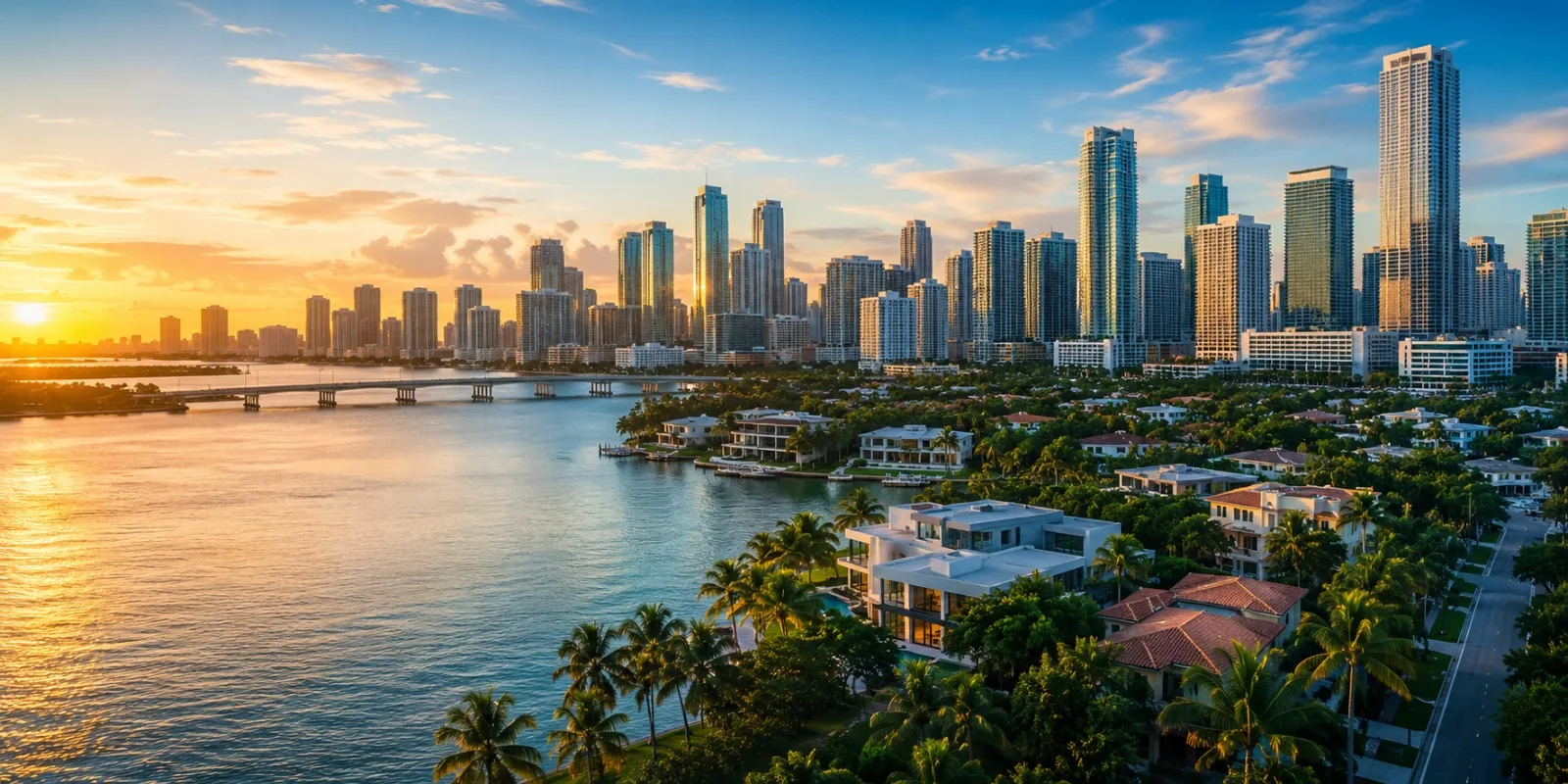
For decades, South Florida has been known primarily for tourism, real estate, and financial services. In recent years, however, the region has begun undergoing a much deeper transformation: it aims to become one of the leading quantum computing hubs in the United States.
The arrival of technology companies, major investments in universities, and the development of an innovation ecosystem are shaping a new concept known as Quantum Beach—an initiative that could position Florida among the country’s leading technology centers over the next decade.
For those following the real estate market, this news extends far beyond the technology sector. High-value industries often become major drivers of economic growth, job creation, and increased demand for housing and commercial space.
One of the most significant announcements came when D-Wave Quantum, one of the world’s pioneering and leading quantum computing companies, confirmed that it will establish its corporate headquarters in Boca Raton.
The company will relocate its executive offices there while continuing to expand its research and development operations, reinforcing its long-term commitment to South Florida.
This is not an early-stage startup. D-Wave is publicly traded on the New York Stock Exchange (NYSE) and has spent more than 25 years developing quantum technology, making it one of the first companies in the world to commercialize quantum computing systems.
Its decision represents a strong vote of confidence in the region’s technological potential, which has already attracted companies specializing in finance, artificial intelligence, and innovation over the past several years.
Although quantum computing may still seem like technology confined to research laboratories, many experts consider it the next major computing revolution, with the potential to reshape industries on a scale comparable to the birth of the Internet or the recent rise of artificial intelligence.
Unlike traditional computers, which process information using bits (0 or 1), quantum computers use qubits, which can represent multiple states simultaneously. This allows them to solve certain highly complex problems significantly faster than conventional systems.
Potential applications include:
According to McKinsey, public and private investments in quantum computing have already surpassed USD 40 billion worldwide. Meanwhile, Boston Consulting Group estimates the industry could exceed USD 100 billion annually over the next decade as commercial applications become more widespread.
South Florida’s strategy goes far beyond recruiting technology companies.
One of the most important recent announcements came from Florida Atlantic University (FAU), which will acquire a D-Wave Advantage2 quantum computing system through an investment of nearly USD 20 million, making it one of the first universities in the United States to operate this type of infrastructure.
The goal is to develop specialized talent, accelerate applied research, and enable startups, universities, and established companies to collaborate on a shared technological platform.
International experience has shown that major technology hubs emerge when universities, research institutions, private companies, and investors work together to create a self-reinforcing cycle of innovation.
Just as Silicon Valley came to represent much more than a geographic location, Quantum Beach aims to become the brand that identifies South Florida as one of the world’s leading quantum computing hubs.
The initiative brings together:
Its objective is to attract businesses, investment, and highly skilled professionals while building an ecosystem capable of competing with the nation’s most established technology centers.

For many years, most major technology companies were concentrated in states such as California and Massachusetts.
Florida, however, has been developing a different value proposition built on several factors that have fueled its rapid growth in recent years, including:
D-Wave’s arrival appears to be part of a broader strategy to position Florida as a leader in high-value industries such as artificial intelligence, biotechnology, and quantum computing.
Historically, cities that attract industries offering highly skilled, high-paying jobs often experience significant changes in their urban economies.
When companies creating well-paid employment relocate to a region, demand typically increases for:
This pattern has been seen in Silicon Valley, Seattle during the expansion of Microsoft and Amazon, Austin throughout its technology boom, and more recently in parts of Miami as financial and technology firms have continued relocating to the area.
Of course, no single announcement guarantees that property values will increase. However, investments of this scale often serve as positive indicators of the long-term economic direction a region is pursuing.
Quantum computing is still in its early stages, but the investments already underway demonstrate Florida’s ambition to become a key player in one of the world’s fastest-growing industries.
The combination of global technology companies, leading universities, public investment, and specialized talent could transform South Florida into one of the country’s most important technology hubs over the coming decade.
For real estate investors, following these trends provides valuable insight—not only into the current market, but also into the long-term forces that may shape future demand.
Because, ultimately, the most attractive cities for investment are often those that create jobs, attract talent, and build the industries of tomorrow before everyone else.

September 1, 2026
Jacksonville is growing by 100+ people per day and has the lowest entry price in Florida. Data, comparison with Miami and Orlando, and how to invest.
Read moreAugust 26, 2026
Zillow’s latest report shows a more stable U.S. real estate market, with increased inventory and better negotiating conditions for buyers. We analyze what this means for Miami, Orlando, and Jacksonville, and why many investors see this stage of the market as a potentially strategic entry point.
Read more
July 29, 2026
Cap rate measures a property's income relative to its value, while cash-on-cash return measures your actual investment performance based on your financing. Both metrics matter for Florida investors, but cash-on-cash better reflects the real returns you'll experience with leverage, especially in today's interest rate environment.
Read more