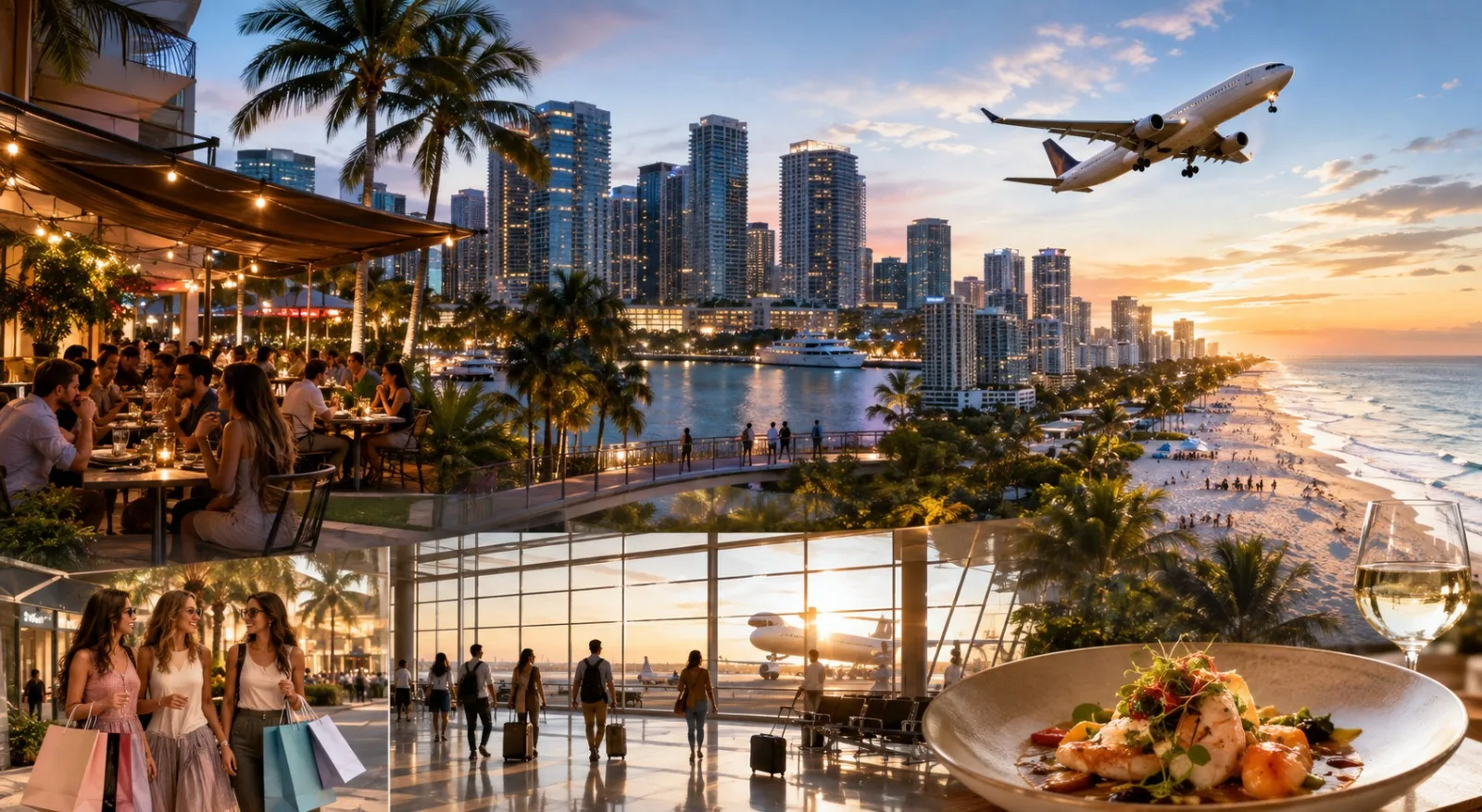
Every August and September, Miami becomes an even more attractive destination for food lovers. But behind the special menus and busy restaurants, Miami Spice also reflects something much bigger: the role tourism and consumer spending play in Miami-Dade’s economy.
In 2026, Miami Spice celebrates its 25th anniversary, with a new edition taking place throughout August and September. The program, organized by the Greater Miami Convention & Visitors Bureau (GMCVB), offers three-course menus at special prices at restaurants across Greater Miami & Miami Beach, with options starting at USD 40 for brunch and lunch, USD 50 and USD 65 for dinner, and a new Reserve category starting at USD 95.
But what lies behind this culinary event?
Miami’s appeal goes far beyond its beaches and climate. Gastronomy, hospitality, entertainment, shopping, and cultural attractions are all part of a tourism ecosystem that generates economic activity across multiple sectors.
The latest data from the GMCVB highlights the scale of this phenomenon: in 2025, Greater Miami and Miami Beach welcomed 28.3 million visitors, and tourism generated a total economic impact of USD 32.2 billion. According to the organization, this activity also supports employment and local businesses.
The previous year had already set a record. In 2024, Miami-Dade welcomed more than 28 million visitors, who spent approximately USD 22 billion in the destination and generated USD 2.2 billion in state and local tax revenue.
In other words, tourism is not simply a source of visitors: it is one of Miami’s economic engines.
Miami Spice works as a tool to strengthen one of the key components of that economy: gastronomy.
For two months, the program encourages both residents and visitors to discover restaurants across different neighborhoods and price points. In its 2025 edition, more than 300 restaurants participated, with offerings spanning more than 20 neighborhoods across Greater Miami & Miami Beach.
This creates an interesting ripple effect: a visitor does not simply spend money on a meal. That spending can extend to hotels, transportation, entertainment, shopping, and other activities during their stay.
That is why a food-focused event can become one small piece of a much broader tourism ecosystem.
For those analyzing Miami from a real estate perspective, these indicators are relevant.
A city that maintains a high volume of visitors needs infrastructure capable of supporting that demand: hotels, restaurants, retail, entertainment, transportation, and, of course, different accommodation options.
Miami-Dade is also more than a tourism destination. The county has positioned itself as an international hub for business, trade, and connectivity.
Miami International Airport is another example of this dynamic. According to Miami-Dade County, in 2025 its statewide economic impact reached a record USD 212 billion in business revenue, while airport-related activities supported approximately 945,682 jobs in Florida.
Miami Spice lasts two months. The trend it represents, however, is much broader.
The growth of tourism, consumer spending, connectivity, and business activity are some of the indicators that help explain why Miami continues to be one of the most closely watched real estate markets in the United States.
This does not mean that a food event automatically drives property prices higher. Real estate responds to multiple factors: supply and demand, employment, population growth, interest rates, urban development, regulation, and overall market conditions.
But it does highlight something important:
Miami continues to build an economy based on attracting people, capital, and activity.
And for a real estate investor, understanding what is driving that activity and where it is moving can be just as important as analyzing the price of a property.
But it is also a snapshot of the economic activity that makes Miami a real estate market worth watching closely.
Miami Spice 2026 — Greater Miami & Miami Beach (GMCVB)
Miami Spice 2026 — GMCVB
Miami Tourism — 2025 Results
GMCVB — Strong Tourism Performance 2025
Miami International Airport — 2025 Economic Impact
Miami-Dade County — MIA Economic Impact